My quote

All Philosophies will go wrong. Just that it needs lil more time

Saturday, July 1, 2017

Gandhiji's Legacy: Beyond Independence

     Independence was not the greatest legacy of Gandhiji as many think. All the Asian and African nations gained independence in the second half of 20th century. Just that India’s methods might have been different without Gandhiji at the scene. And if one read through the writings of Gandhiji right from his Hind Swaraj it's not independence which had high priority. His priority was his vision towards how Indians should live. His two pillars were Ahimsa and Truth. Though the major part of his vision didn’t get the life, some of his legacies helped India to survive post-Independence.


So what's his legacy? [What if Mahatma Gandhi didn't exist?]
    Lets compare with our peers[Asian and African nations] to know India’s success. Many political scientists ‘predicted’ that India as a country will not survive for long given its myriad problems and diversity & size. No other nation in the world has this much diversity[1000+ languages, religion, caste, ideologies… ]. Even China, which is large in size have less linguistic diversity as Mandarin is the language of the majority.
  • India not just survived but also remained the DEMOCRATIC OASIS in the entire South Asia. Our twin brother Pakistan who believed in separate nation theory got divided by its own theory within 30 yrs[read 1974-Bangladesh liberation]. Democracy was scarcely seen in most nations[Myanmar, Afghan, Nepal etc]
  • India was advised by many to not opt for democracy in those initial years, given the poor literacy rate. But India, surprising those advisers, went one step further, chose universal adult franchise. Even advanced democratic like Singapore, Switzerland gave voting rights to women after India did. How democracy survived in a nation with all its backwardness, illiteracy and conflicting interest?
  • The abundance of conflicting interest of citizens, either among different sects or with the government needed democratic non-violent protest as the way of struggle.
    Gandhiji’s real success was in instilling DEMOCRACY[non-violent ethos] among millions. Here one cannot say its just Gandhiji. But the collective leadership including stalwarts like C.R Das, Motilal Nehru, Nehru the junior, Patel, Kripalani and countless others.

How he did that?
    Each movement of Gandhiji was managed in such a way. Like the timely withdrawal of Non-cooperation movement[NCM] at the violence of chauri-chaura incident. Three major movements occurred with approx 10 yrs spacing
  • 1919-NCM
  • 1929-Civil Disobedience movement
  • 1942-Quit India movement
thus cultivating political knowledge across generations through participation. It'Is really hard to keep any major protest orderly for long in such large scale even today with all modern means of communication. Its success had imparted the important political education to the masses. This particular form of protest is guiding the people for generations for most of their grievances rather than the violence seen in most nations.

    In the intervening times of above mentioned major protests, Gandhiji involved in his ‘constructive-program’. In fact, Gandhiji wrote to his friend and supporter, Jamnalal Bajaj, saying, "My real politics is constructive work." Constructive Program is a term coined by Mahatma Gandhi to describe one of the two branches of his satyagraha, the other being one like civil disobedience, sometimes referred to as "obstructive program". The constructive program is a way of carrying out a struggle through community and self-improvement by building structures, systems, processes, and resources that are alternatives to oppression and promote self-sufficiency and unity in the resisting community. Though not as well known as his nonviolent resistance programs, Gandhi recognized the value of the constructive program and used it successfully as early as the first year of his campaigns in South Africa, 1894. In fact, the value of CP in the struggle for the independence of India cannot be overemphasized, as he described civil disobedience as "an aid to constructive effort."

    India proved the skeptic predictions of many naysayers wrong that India would disintegrate and had become one of the fastest growing democratic-superpower. Each major obstacle like Nehru’s death, emergency rule etc had been overcome with the inherent democratic ethos.
  
    India’s Independence was inevitable with or without Gandhiji but India as a country wouldn't have survived thereafter without that man. After all, Nehru, the staunch believer of democracy and the glue that held India together post-independence was Gandhiji’s man.

Sunday, April 16, 2017

Love and War; and Some Gandhi

The famous saying 'All is fair in Love and War' lead me to feel these emotions as kings[or queens] of all other emotions. When these emotions peaks, hardly anything can contain him from within. No ethics and certainly not other emotions. Love[and war] will find its way out.
Almost all other emotions can be roughly categorized into either emotion. For say,

LOVE
WAR
Kindness
Anger
Compassion
Hatred
Pity
Greed
Sympathy
Jealousy
Empathy
Disgust

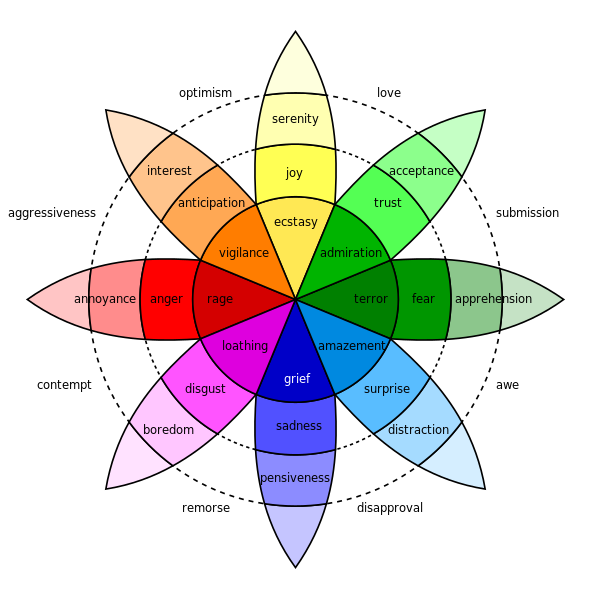
Of course, not all can be accommodated in these two. There can be some more basic emotions like sadness. The three basic colors combine to form hundreds of colors, Similarly, we have emotions.
Or some like Robert Plutchik goes with eight basic emotions, File:Plutchik-wheel.svg

Fine, why I'm into all these?

Some eternal questions always puzzle me, like,

Rationality Vs Emotions; Which forms the basis in human evolution. 
For say, let's take ethics[truth in Gandhian parlance]. How and why it evolved? The basis is as much rationality[which is good] as emotion[compassion, sense of justice].

Being a Gandhian and Devil's advocate, can non-violence be imbibed in humanity eternally? His two eyes were Truth and Non-violence. I always question myself on the later on both its necessity and possibility. Both Love and War are basic emotions of humans since time immemorial. So can such a basic emotion be overcome?

Thursday, March 9, 2017

Where the sun is!


The right eye says
the sun is on the right side of the pole
the left eye says
the sun is on the left side of the pole
But the sun says
I stay on my own journey
what the truth is!
And 
where the sun is!

Thursday, February 11, 2016

How the hell one could be honest in the hell of a system!!! ACTUALLY WE CAN

The question of being honest and ideal in public life has always pestered me. How to make the idea penetrate en masse?  I always wanted to write this article. Today I saw ‘visaranai’ movie, which gives the ‘little push’ to overcome the inertia.

The case as shown in the movie ‘Visaranai’ is not much rarer. NCRB [National Crime Records Bureau] data states 67% of total prisoners are undertrials. This is despite the Supreme Court’s advocacy for releasing undertrials who have undergone half their likely jail terms in prison. Many among the undertrials have supposedly faced this kind of situation in varying magnitudes.

After the movie I happened to speak to a lawyer of Madras high court. He was lamenting about the corruption in the judiciary. Yes, even the much hoped and hyped judicial system cannot be trusted. “Judges are not always dealing under the influence of bribes” he said. Oh! That means the system is yet to get fully spoilt, good news isn’t it? If it is much harder to accept, try his other statement “Honest lawyers are rarest of the rare”. Mind you the judges are not sprouting out of a lab grown specimen. Today’s lawyers are tomorrow’s judges. But one cannot universalize that the entire judiciary is corrupted. At least I wish it is not. The point is, even the ‘last hope’ of a common man is not much trust worthy.

I want to blame the system as everyone does before think of the solution if any. ‘Honesty’ always an ideal, but once a ‘possible way’ is becoming more and more a luxury. This luxury demands unfettered courage of a suicide bomber and desirelessness of an ascetic. Seems an exaggeration isn’t it? Actually, it’s not.

Where this starts and why this happens? Apart from the usual reasons like desire for money, power and position there are some ‘practical’ forces forcing most people into the vicious cycle. For a family man to lead a normal life in a city he needs lump sum money each month. This is just to meet the basics like education, health and food. Primary school education costs above 50,000-100000 rs per annum; family movie outing costs 2000 rs; hospital expenses! Doesn’t demand an explanation. On top of all this the peer pressure to lead a ‘decent’ life gives the finishing touch.

The entire system revolves outside the written rules. The ‘Bribe’ is doing over-duty not to break the law, but for the working of the law per se. For passport verification; driving license; as basic as an address change request; etc. carries different levels of ‘denomination’. The worst part is, if anyone speaks against it, the reply is “ennappa ulagam theriatha payanna irukiye” [“Oh! What a poor ignorant boy”]. Just 'living' becomes a luxury. How the hell one could confine himself within the realms of ethics. The ‘How’ leads to ‘why the hell’. This is more apt to public officials who come into mind when one speaks of corruption or ethics. This sets the trend culturing them during their formative years and later the desire for ‘more’ governs the rest.

The interesting part comes here. There are certain sections of people who don’t have at least the ‘compelling reasons’ of the ‘bureaucratic system’ to be corrupt but still they are. Let us take so called employees of IT sector. They are earning decent money for leading a decent life. When the financial year is about to end there comes the ritual called filing income tax returns. How many of them are honest about the provisions for tax exemption regarding HRA [house rent allowance]; medical bills, etc. Does it not amounts to tax evasion and stifles revenue to the government? It may seem trivial, but mind you that the section of ‘salaried employees’ is growing very fast and India will add millions in the organized sector in the coming decades. The effect will be debilitating. Secondly, magnitude per se is irrelevant in the matters of corruption. All most all corrupted people started theirs in pennies. So, the corruption depends on the mindset and ethical attitude, not on whether its public offices or not. It is just that the scope is more for it in public offices.

Corruption
Yes, It’s you and me who are corrupted. It’s you and me who are part of the system. Stating various reasons from family needs to ‘pressure from above’ the reasons vary but the actions don’t.

And the solution! There are many, viz. institutional, technology based, stringent laws, etc. But again, most are part of the system and will succumb to it. More than pointing fingers at the politicians, bureaucrats and officials, it’s you and me who needs to change. Most of us are ‘leveraging’ our positions as much as possible to gain the extra penny. We are part of this ‘honourable corruption’ culture. It may seem petty, like bribing to escape from traffic police; getting black tickets for films; registering land for lower values; etc. Till we clear ourselves of all the poor behaviors, remember that when we speak of national wellbeing we are nothing but HYPOCRITES.

Thursday, January 21, 2016

My Dosth

All these years- just your
Name cause me tears

I cherish you and admire
U occupied a place never to retire

You are a friend in need
Removed in me bunch of weed
Not to mention the sowed seed
Together we'll silly many a deed
A person whom I completely heed
Each word I really mean indeed!

The person I always want to be with
Closer than any known kith
Protecting each other like a sheath
With no hesitation beneath

With a friend like this life will never go digress
Who will provide the mana to fight the aggress
All these affection I can never suppress               
Finally I realize English is so dearth to express


-To my 'Ever'est Friend

Sunday, March 8, 2015

B.singh to R.Tagore:Path they tread

India; enouncing the word itself will cause goose bumps to many of us. For ‘outsiders’ it is a unique phenomenon kindling interest among laymen, scholars, leaders and researchers alike. From an object of ridicule and skepticism about its existence per se India has become an entity of awe and grandeur. All these said and done India has been a nation in making for decades and it will remain so for decades.

If we notice keenly we can observe a coherent trajectory the nation had followed from its strong foundation. There were many noble founders of the modern India. A nation will give birth to great leaders during its own genesis or crisis. In turn the leaders will make the nation, a pious circle of fecundity. It is evident for anyone looking at the south Asian nations to the least that the foundation is so important from which there will hardly be much absolute deviation. Hence, amidst the region of instability and political chaos India remains a democratic oasis.

The nation making which set off during 19th century since the Bengal renaissance became so enormous during the first half of 20th century. The journey of our Independence movement was not just to oust British but also to utilize a great opportunity therein. The greater purpose was perceived ‘among others’ by a man who engineered his own novel methods to attain the same. The man was Mr. Gandhi and the methods are history. No, this article is not penned around him or his methods. The following is about different approaches of the diverse leadership which advertently became part of nation making. What I mentioned as the greater purpose was imparting political and social discipline in the masses and training them for democracy.

During the struggle for independence we could see different ways of fighting against injustice. Diverse ideologies had clashed with one another whilst fighting with their common foe and they exerted pulls from different directions. The nation moved in the resultant direction.

Any nation which is determined to fight for its cause has to tread through the path of ‘aggression’. But the violence (aggression) not necessarily has to be a physical one. In this article I’m juxtaposing the ‘level’ (or kind) of aggression followed by different leaders of the time. In a way I’m pondering over causal historic linkage that could be the reason for people’s attitudes of today regarding the ‘right’ way of aggression.

The articulation is seemingly important in this time when one section is glorifying Mr. Godse by erecting his statue, spearheading suppressive attitude against free speech, glorifying violence in the name of valour and lot more. The beauty of democracy is that it relies on human reasoning and hence, over time progressive and liberal thoughts sustain amidst continuing ideological rivalry. But the trajectory depends on which thought we ‘commons’ are embracing not just as a personal opinion but also collectively through literature, films, political leadership etc.


It’s too much introduction huh. Let us enter into the theme now. Whenever I see the national leaders as in the above picture I’m seeing not just faces but different ideological attitudes. We could roughly arrange their methodologies in a sequence based on theirviolence’ content.

To start with, let us consider the famous and vigorous patriots of the time; Mr. Bhagat Singh, Sukhdev and their comrades who took the revolutionary path of arms and daringly fought the gallant British. They showed unflinching courage against the British and devotion towards the nation. Despite ‘the Majesty’ viewing these people as terrorists fighting against their ‘own’ government these men fought to liberate millions. Though the courage and selfless sacrifice is to be honoured the approach has to be questioned. Even many of the cadres themselves opined against ‘individual terrorism’ and proposed for ‘united mass action’ in their later days.

Ironically Mr. Bhagat Singh and his comrades became national heroes not after their murder of a police inspector in Lahore or after throwing bombs in the Legislative Assembly in New Delhi but during their practice of hunger strikes and non-violent civil disobedience within the walls of Lahore’s prisons in 1929–30. His Assembly Bomb Statement put forth revolution as “the one which did not mean the cult of the bomb and the pistol; it meant that the injustice inherent in the present order of things had to end.”


[Disclaimer: The axes won’t intersect at zero, of course. It’s my lack of creativity or time I stopped perfecting itJ]

The trio Lal, Bal, and Pal forms the next bead in our string. These great fighters were revolutionary in action and had no belief in ‘petitioning the deaf ears’. They didn’t directly recourse to extreme violence themselves, but were admiring such actions. Tilak especially through his Kesari (in Marathi) and Mahratta (in English) had glorified a kind of valour which was not actually farther from violent bloodshed. Despite his metaphysical defence of altruistic violence, Tilak never preached political murder.

He proclaimed ‘As our fight is going to be constitutional and legal, our death also must, as of necessity, be constitutional and legal. We have not to use any violence’. One could sense even more mellowed views in Mr. Tilak after release from prison in 1914.

Next is the major influencer and non-violent proponent Mr. Mohandas Gandhi. Gandhiji and Mr. Tagore had a great understanding of human nature and aspired for a ‘political culture of masses’ which would result in perpetual peace and prosperity of moral (and material) life.

Gandhiji believed that if one chose the violent path it would set bad precedence and evolve the political and social culture of the masses in that direction. Violence would have been the answer for even internal issues wherever differences occur. Especially in a country like India with huge diversity the approach is deadly. A simple parlance here could be is that, our ‘brother nation’ which aspired to go alone and for partition had got itself partitioned in a quarter century.

To a great deal its Gandhiji’s legacy that till date an unmet demand is mostly met with non-violent protests in India. It extends from demanding petty services to protesting for issues of national scale. Violence by naxalites and some miscreants are still an exception rather than the norm. It is not to say that Gandhiji’s methods were without flaw but they seem the best among ever human-invented methods.

In other hand Mr. Tagore went a step further and considered that the methods of Gandhi were a kind of psychological violence and also would detract the masses from the required political discipline. His stance could be surmised as below,

Don’t get as alms anything you want – you will loose it
Don’t get it thru arms either- You will ruin it
Earn it! Strive for it! Period!!!

Tagore stood for much more disciplined and ‘legitimate’ i.e. constitutional methods. Tagore was correct in his prediction as we can see ‘fast-protests’ become ‘order of the day’ not least as a political gimmick and also hurdling the progress. But those hurdles are a ‘necessary evil’ in a democracy as feedback loops and mandatory checks. 

There is no limit in conception of any ideal. Jain ascetics and fruitarians are ‘more non-violent’ than Mr. Gandhi and vegans. To live a ‘worldly life’ certain level of violence is necessary. Yes we can’t abandon agriculture! Can we? If u wonder what agriculture has to do with violence, Jainism’s Occupation-related violence (UDYOGI HIMSA) holds the answer. As agriculture involves killing of many micro organism, pests etc some schools of Jainism view it as a form of violence. But for a country and civilization to live in peace, harmony and progress there should be a line drawn. Yes! The contention of today is where to keep that ‘line.’ Is it not a worthy case to contemplate over the need of violence in our personal, social and political life?

Actually I thought of having a pattern with different factors roping in and including many more leaders especially Messrs Jinnah, Savarkar, Syed Ahmed Khan, Vivekananda etc but I realized that I would need a minimum of 4 or 5 dimensional graph. So I restricted myself to including two other important leaders without which I couldn't feel satiated. Those are Mr. Subhash Chandra Bose and Mr. Ambedkar. These two great men had entirely unique approaches to realize their cherished ‘goal’, especially for the later the ‘goal’ itself was different from the others being discussed.

Some may wonder why I can’t place Mr. Bose in x-axis itself. I couldn’t perceive his methods as mere violence, because in violence there will be an element of hatred or vengeance and the action will be more of an impulsive decision. But in the case of our Man, he took a more organized, far-reaching and concerted action. He went upto the extent of meeting Fuhrer, voyaging in submarine across oceans and much more. Hence I couldn't put him in the ‘x-axis’ per se.

The other reason goes like this. The proponents whom I placed in the positive ‘x-axis’ worried about the violent methods that they will gradually imbibe as a “national character” and implicate the nation badly. This is true in the case of methods chosen by leaders in negative x-axis. But in the case of Mr. Bose the concern is not fully valid. Because his approach might have influenced the political culture of the leaders post independence and hardly would have affected the masses character directly. The so called idealism of India and its foreign policy during Nehru’s era wouldn’t have been existed. Nevertheless the need for such idealism is always debatable. I for one stand for idealism even in foreign affairs rather than cunning-selfishness in the name of realpolitik.

Finally when I think about Ambedkar, his composition was unique viz., high national stature (more now than then); distinguished legal acumen; working alongside the British but for the determined goal of uplifting the socially downtrodden. He never considered the ‘need’ to ‘drive away’ the British because the British rule was perceived more conducive for the Dalit upliftment than the ‘native elite’s’. Hence even until the final years of independence Mr. Ambedkar was supportive of the British rule. But our takeaway here is that, in his fight against caste-Hindus for eliminating caste discrimination he always adhered to non-violent means.

I perceive this convergence of attitude towards violence and democratic ethos among great leaders is the reason why India not just exists but prospers. Whilst we shall not adhere to non-violent path just because some leaders had advised to do so, but their reasoning behind it demands a serious consideration. Then why I have put heavy emphasis on the path leaders followed? As you can see in the graph I have placed ‘people’ at the origin(0,0) because people in general are always aligned with the existing social institutions and beliefs and are directed by the leadership. The leadership I denote comprises a wide range, viz. family elders, teachers, regional leaders, national leaders, writers. The people moves in the resultant direction.

I’m done. One may ask, why this motley of various stuffs? Simply the articulation of national leaders and their ‘stewardship’ is an inspirational and a productive one. After all, the pondering on the ‘need’ for ‘violence’ in a society has to be done by the masses of all time. The exhibition of shallow water like this I hope will help deep dive for the readersJ

Tuesday, April 22, 2014

C'mon Compatriots

We have our nation to build
We're determined and passionate guild
There is nothing to fear
Though we are in a state of wear and tear

Lest not move a step back in
Midst of chaos and confusion
We have goals to strive for
We have one life to give in altar.